
French Side vs Dutch Side of St. Maarten: What’s the Difference?
St. Maarten is one island shared by two countries: France in the north and the Netherlands in the south. You can cross from one side to the other freely, but a few things change: the currency, the plugs, the phone networks and the vibe. Here is what you need to know.
Updated October 2026
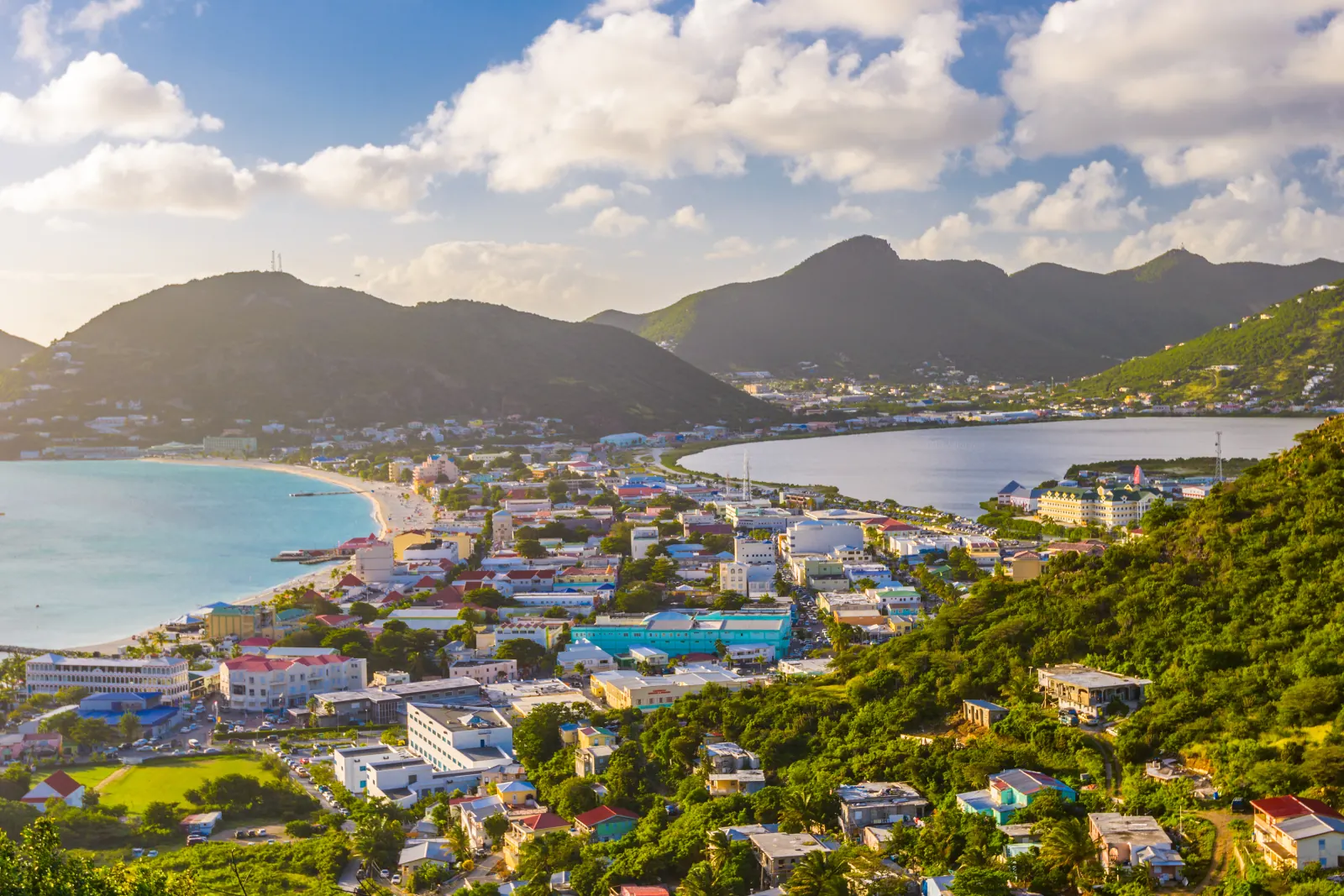
The essentials in 30 seconds
- Two countries
- In the north, Saint-Martin, part of France and of the European Union. In the south, Sint Maarten, a country within the Kingdom of the Netherlands.
- Border
- No border control: you cross from one side to the other without showing a passport, often without even noticing.
- Size
- About 20 square miles on the French side and 13 square miles on the Dutch side.
- Currency
- The euro on the French side, the Caribbean guilder on the Dutch side. US dollars and euros are accepted everywhere, on both sides.
- Languages
- French on the French side, Dutch and English on the Dutch side. English is spoken everywhere.
One island, two countries since 1648
The island was divided between France and the Netherlands by the Treaty of Concordia, signed on March 23, 1648. Today the French side, Saint-Martin, is an overseas collectivity of France, with Marigot as its capital. The Dutch side, Sint Maarten, is a constituent country of the Kingdom of the Netherlands, with Philipsburg as its capital.
There is no border post. On the road between Marigot and Philipsburg, an obelisk erected in 1948 for the treaty's 300th anniversary marks the line, along with the two flags.
The Dutch side is smaller but more populated: about 43,000 residents, compared with about 31,500 on the French side.
The practical differences
| Topic | French side | Dutch side |
|---|---|---|
| Country | France | Kingdom of the Netherlands |
| Capital | Marigot | Philipsburg |
| Language | French | Dutch and English |
| Currency | Euro | Caribbean guilder |
| Plugs | European, 220 V | US style, 110 V |
| Phone code | +590 | +1 721 |
| Airport | Grand Case (SFG), regional flights | Princess Juliana (SXM), international flights |
On both sides, US dollars are accepted almost everywhere and credit cards are widely used.
Pack an adapter: European plugs on the French side, US plugs on the Dutch side. Before plugging a US device in on the French side, check that it accepts 220 V.
Two different vibes
Dutch side: lively
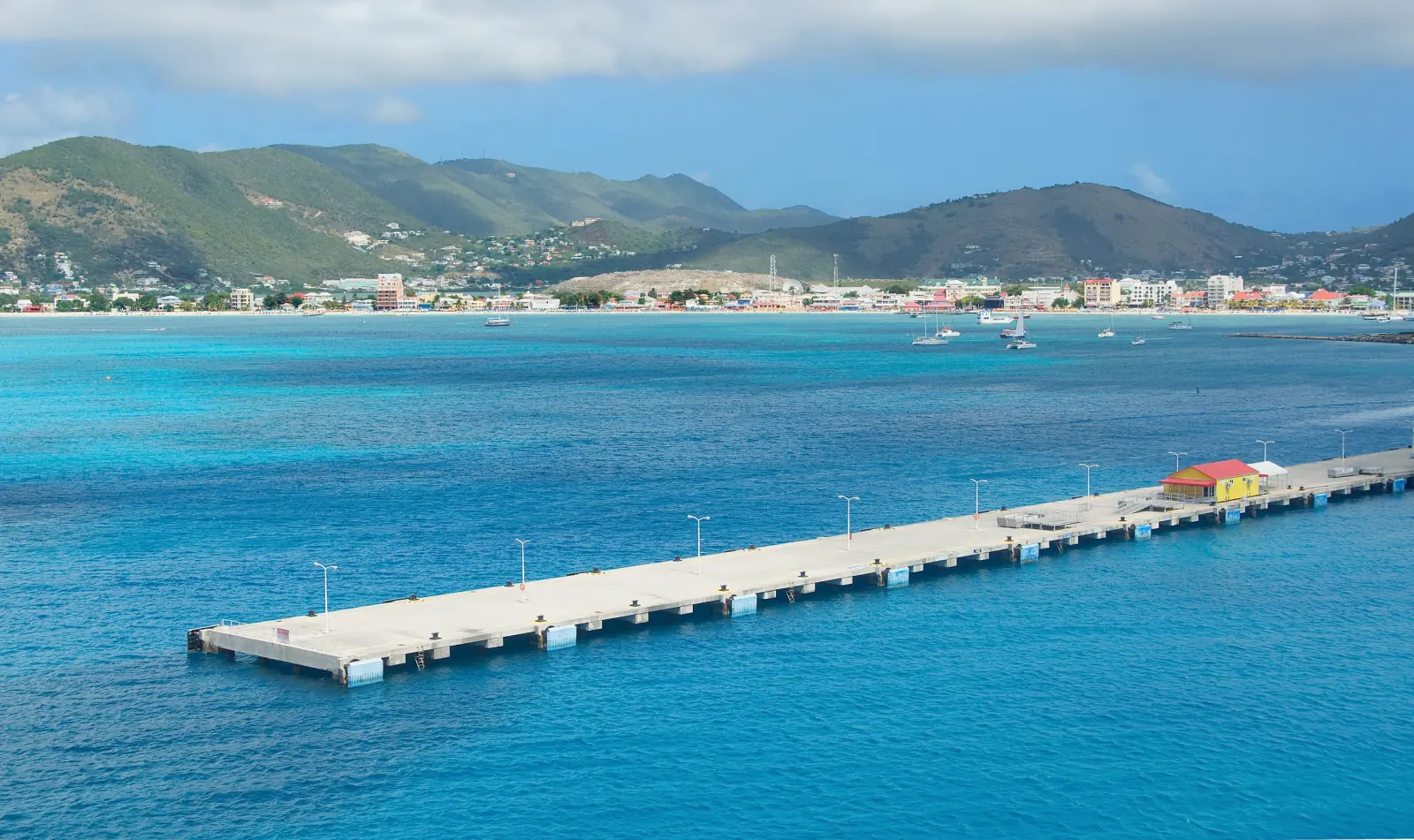
This is the livelier, more built-up side. It has the cruise port, the international airport, Maho Beach with its low-flying planes, the duty-free shops of Front Street in Philipsburg, the casinos and most of the nightlife, especially around Simpson Bay.
French side: more laid-back
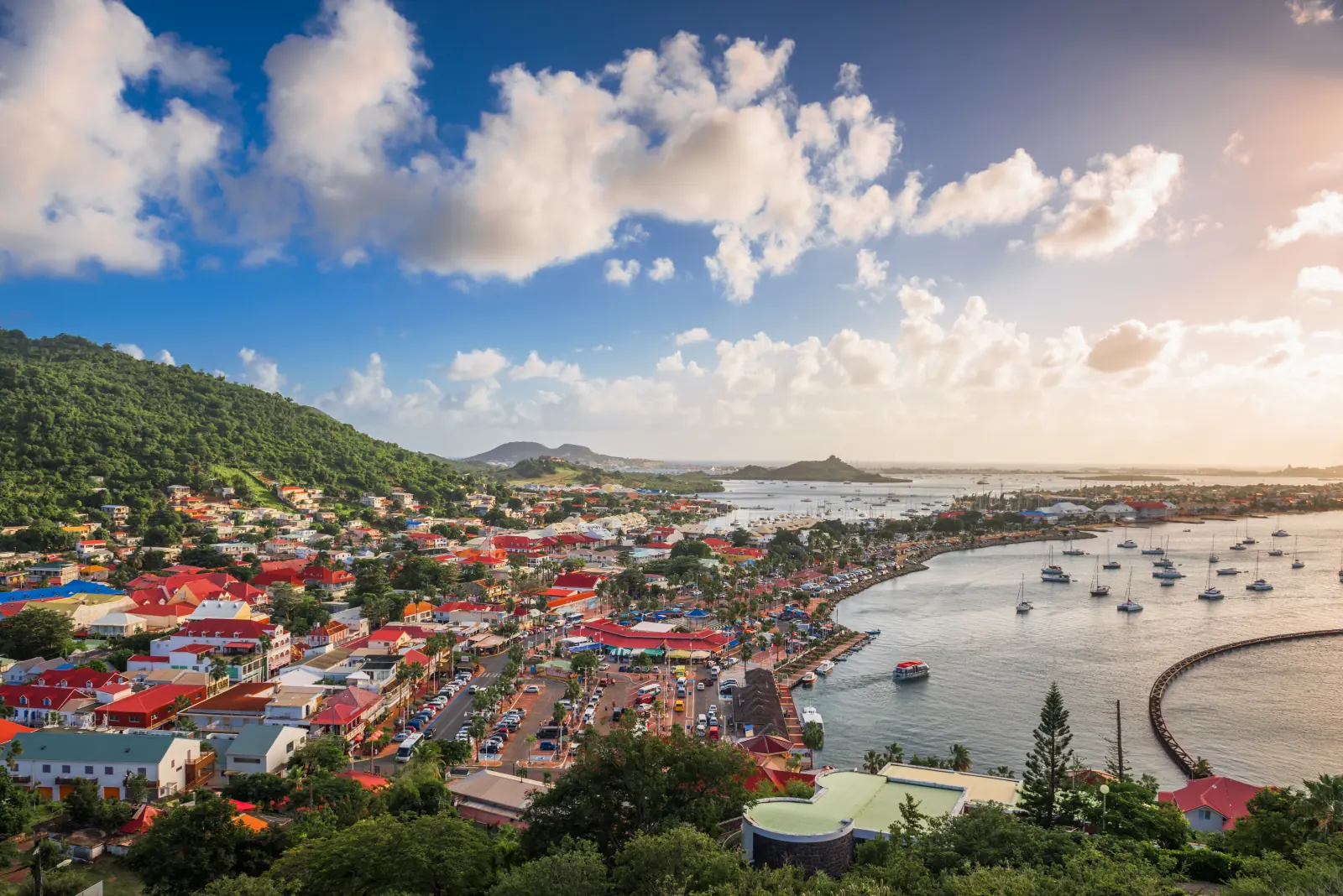
The French side is quieter and more natural. Grand Case is known for its restaurants and its lolos, open-air grills serving local food. Marigot has its waterfront market, and the French side has some of the island's most beautiful beaches, such as Orient Bay. It is also where the boats to Pinel Island leave from.
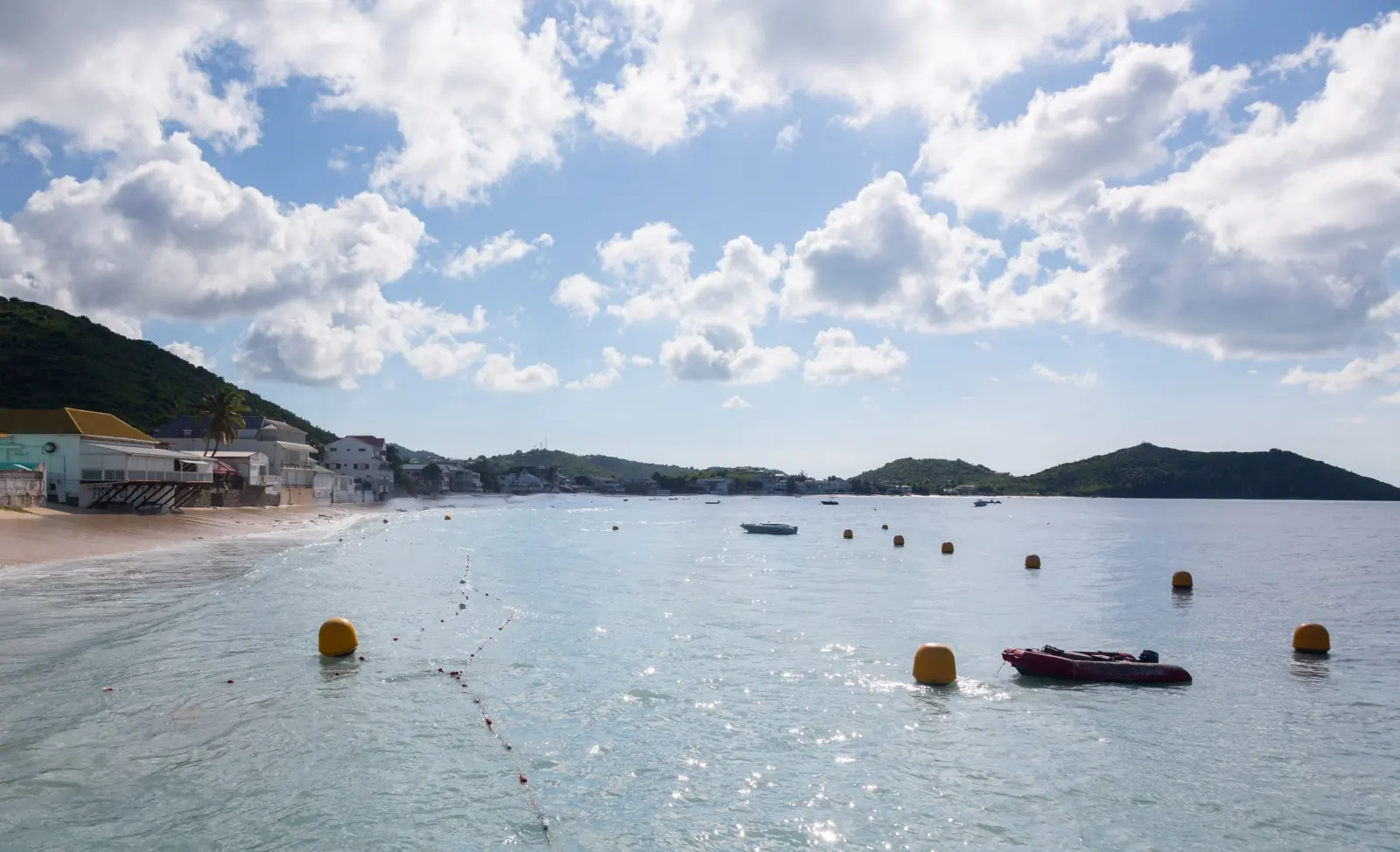
Crossing from one side to the other
- No passport check: you simply drive across. Signs and flags mark the border.
- You drive on the right on both sides.
- Calls between the two sides are international calls (+590 on the French side, +1 721 on the Dutch side). Your phone may also switch between French and Dutch networks as you move around: check your plan's roaming terms before you travel.
- Prices are in euros on the French side and in guilders or dollars on the Dutch side. US dollars and euros are accepted everywhere on the island.
Which side should you stay on?
Choose the Dutch side if you want to be close to the airport, the nightlife, the casinos and the shopping. Choose the French side if you prefer quieter beaches, French food and a more relaxed pace.
The island is small: wherever you stay, the other side is never far. Where to stay in St. Maarten: the best areas
Frequently asked questions
Do I need a passport to go from the Dutch side to the French side?
No. There is no border control between the two sides of the island. Just keep an ID with you.
Is the French side part of the European Union?
Yes. Saint-Martin is part of France and of the European Union. Sint Maarten, the Dutch side, is not part of the European Union.
Which currency should I use?
US dollars and euros are accepted everywhere on both sides. The official currencies are the euro on the French side and the Caribbean guilder on the Dutch side.
Do US plugs work on the French side?
No. The French side uses European plugs and 220 V. You need an adapter, and your device must accept 220 V.
Is it expensive to call from one side to the other?
Calls between the two sides are international calls. Check your plan before you travel.
Which side is better for beaches?
Both have beautiful beaches. On the French side: Orient Bay and Grand Case. On the Dutch side: Maho Beach, Mullet Bay and Great Bay. The island is small, so you can easily enjoy both.
Read next
Sources: INSEE (2022 census), World Bank (2024), Treaty of Concordia (1648). Information gathered in October 2026.