
Is St. Maarten Safe? Safety Tips for Your Trip
St. Maarten is a busy tourist destination. As anywhere, a few common-sense habits are all you need to enjoy the island with peace of mind. Here are the emergency numbers, useful precautions for everyday life, the beach and the road, and what to know about hurricane season.
Updated October 2026

The essentials in 30 seconds
- Emergency, French side
- 112, or 15 (medical), 17 (police), 18 (fire department).
- Emergency, Dutch side
- 911.
- Hurricane season
- June 1 to November 30, peaking from August to October.
- Before you go
- Check your country's official travel advice.
Emergency numbers
The numbers are different on each side of the island. Save them in your phone when you arrive.
French side
- 112
- European emergency number, all services
- 15
- Medical emergency (SAMU)
- 17
- Police
- 18
- Fire department
Dutch side
- 911
- Emergency
On the French side, the Louis-Constant Fleming Hospital in Concordia (Marigot) has a 24-hour emergency room. Hospitals, doctors and pharmacies
Everyday precautions
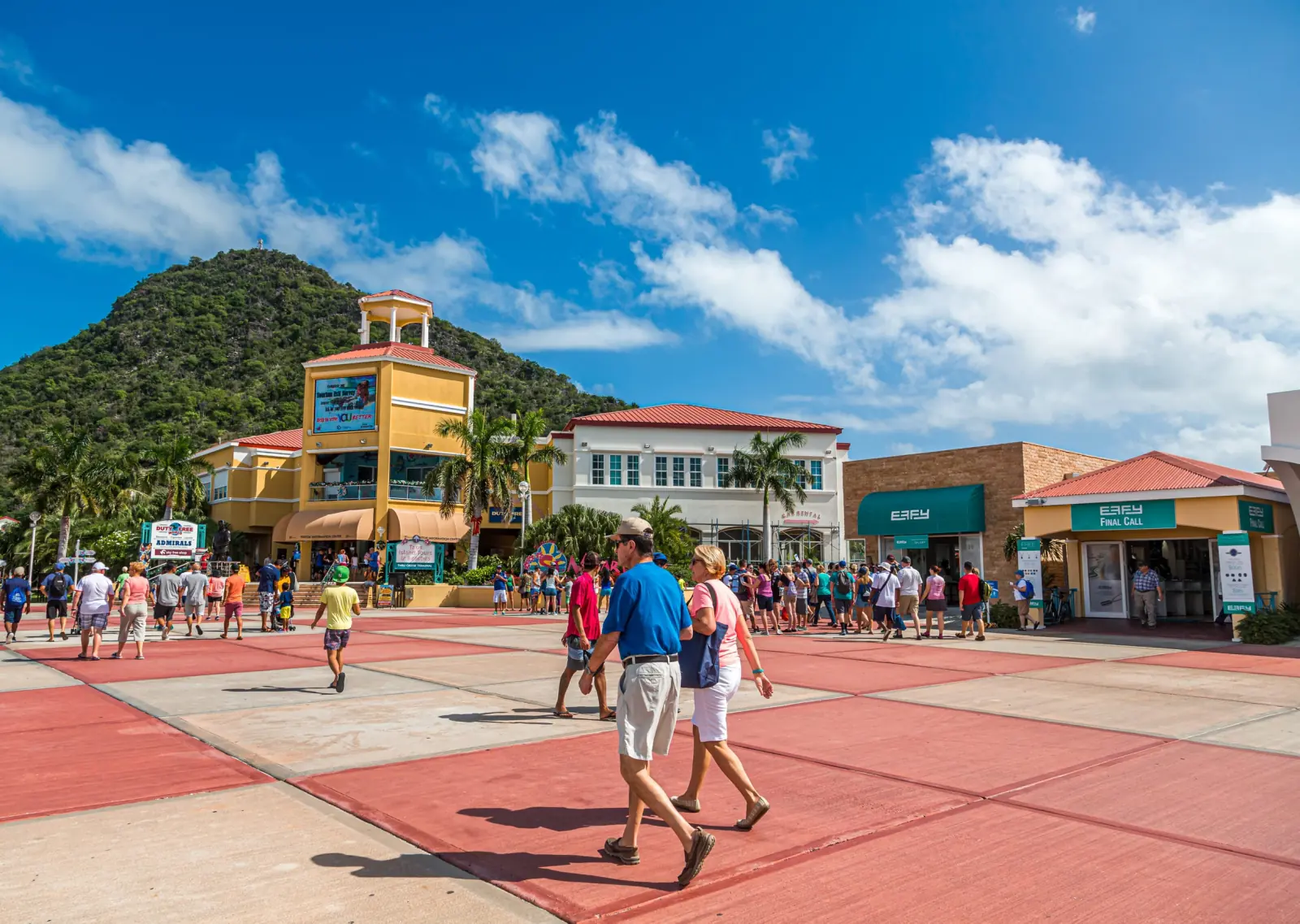
- Never leave anything in sight in a parked car, even for a few minutes, especially in beach parking lots.
- At the beach, keep your bag and phone close and bring only what you need.
- At night, stay in busy areas and take a taxi home rather than walking through isolated places.
- Withdraw cash during the day, preferably from ATMs inside a bank or a store.
- Keep your passport and valuables in your room safe, and keep a photo of your documents on your phone.
- Lock the doors and windows of your rental when you go out and at night.
At the beach and in the water
Maho Beach: beware of jet blast
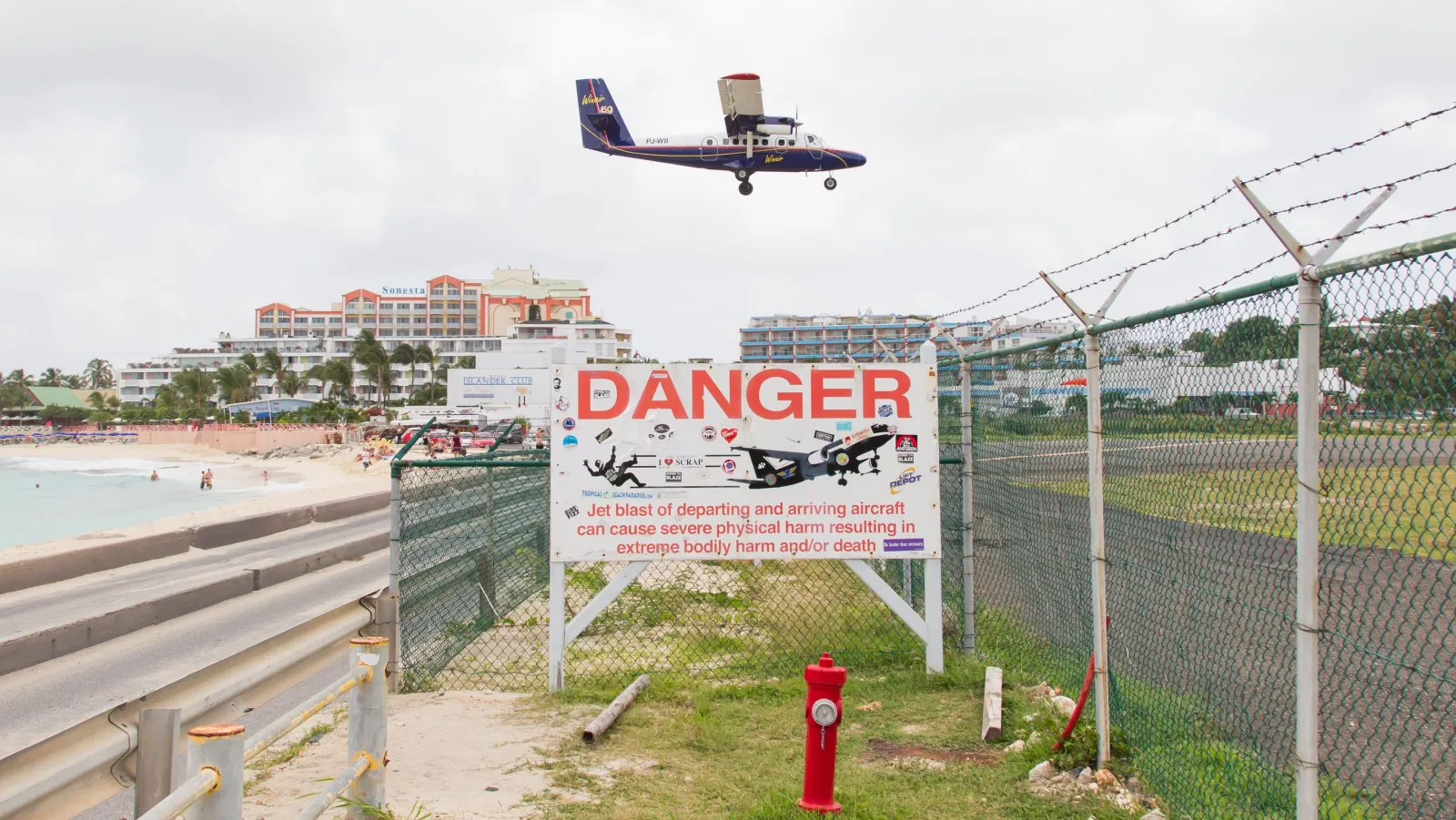
Never stand behind the airport fence during a takeoff. The jet blast can throw people onto the road and has already caused a fatal accident. Watch the landings from the beach, well away from the fence, and keep children back.
The sea and the beach
- The east coast, facing the Atlantic, is often rougher than the west coast. Check sea conditions, never swim alone or after drinking, and always keep an eye on children.
- As everywhere in the Caribbean, some beaches are lined with manchineel trees, which are highly toxic. Don't touch their small green apple-like fruit and don't shelter under them when it rains: their sap burns the skin.
- Sea urchins are common on rocky bottoms: water shoes will save you painful stings.
- In some years, sargassum seaweed washes up on east coast beaches. As it rots, it gives off a rotten-egg smell: stay away from large piles. West coast beaches are usually spared.
- The sun is strong all year: wear sunscreen and a hat, drink plenty of water and avoid long exposure at midday.
On the road
- You drive on the right on both sides of the island.
- Roads are often narrow and winding, and traffic jams are common at rush hour. Some roads are poorly lit at night: drive carefully.
- On a scooter or ATV, always wear a helmet.
- Never drive after drinking: a taxi costs far less than an accident.
Health
- Dengue fever circulates regularly in the Caribbean. Protect yourself from mosquitoes with repellent and long sleeves in the evening, and see a doctor if you get a fever.
- Before you leave, check that your insurance covers medical care abroad and medical evacuation.
Hurricane season
The Atlantic hurricane season runs from June 1 to November 30, with peak activity from August to October. Outside this period, the risk is very low.
- If you travel during the season, choose travel insurance that covers weather-related cancellations.
- Follow the forecasts: Météo-France Antilles-Guyane for the French side, the Meteorological Department of St. Maarten for the Dutch side.
- In case of an alert, follow the instructions of the authorities and of your hotel or rental.
Weather and best time to visit
Before you go
- Check the official travel advice from the US Department of State (or your own government).
- US citizens can enroll in the Smart Traveler Enrollment Program (STEP) to receive safety alerts.
- Keep a copy of your passport and insurance on your phone and in your email.
Frequently asked questions
Is St. Maarten safe for tourists?
St. Maarten is a busy tourist destination. As anywhere, a few common-sense precautions go a long way: don't leave anything in your car or unattended at the beach, take a taxi at night and check your government's official travel advice before you go.
What is the emergency number in St. Maarten?
On the Dutch side, dial 911. On the French side, dial 112, or 15 for a medical emergency, 17 for the police and 18 for the fire department.
Is it safe to stand behind the fence at Maho Beach?
No. The jet blast at takeoff can throw people onto the road and has already caused a fatal accident. Watch the planes from the beach, away from the fence.
When is hurricane season in St. Maarten?
From June 1 to November 30, with peak activity from August to October.
Are there mosquitoes and dengue?
Yes, dengue circulates regularly in the Caribbean. Use repellent and see a doctor if you get a fever.
Is it safe to drive in St. Maarten?
Yes, with care: you drive on the right, roads are narrow and sometimes poorly lit at night, and you should never drive after drinking.
Read next
Sources: Collectivité de Saint-Martin and Sint Maarten Police (emergency numbers), NOAA (hurricane season). Information gathered in October 2026.